Tag: inspiration

  • The Difference Between Inspiration and Momentum

    The Difference Between Inspiration and Momentum

    The difference between inspiration and momentum - text

    Introduction

    A lot of creative people, myself included at times, talk about inspiration like it’s a tap you can turn on. As if the right mood, the right setting, or the right moment will suddenly unlock everything. I used to think the same, and sometimes still do unfortunately.

    The problem is that inspiration is wildly unreliable. It shows up uninvited when you’re in the shower, and it vanishes entirely when you sit down to actually create something. If build your creative process around waiting for it, you’ll spend more time waiting than making.

    There’s a better way to think about this. It’s not about inspiration vs. no inspiration. It’s about understanding what inspiration actually is, and replacing the waiting with something that works.

    Inspiration is unpredictable. Momentum isn’t.

    Inspiration is a feeling. It’s real. It’s useful. It absolutely makes creative work feel easier. But like any feeling, you can’t schedule it, summon it reliably, or make it last.

    Momentum, on the other hand, is mechanical. It doesn’t care how you feel. It just requires motion… small, consistent actions that keep the work alive even when the feeling isn’t there.

    Think of a car engine. You don’t need to feel enthusiastic to start it. You just turn the key. The car doesn’t know you’re tired or distracted. It just runs.

    Your creative practice works the same way. When you show up and do something, even something small, the machine keeps turning over. When you stop, it gets cold and harder to start again.

    James Clear captures this well: he notes that professionals don’t wait for inspiration to strike, they follow a schedule and show up regardless. The schedule is what produces the work; inspiration is what occasionally makes it feel wonderful. (Source: The Myth of Creative Inspiration, JamesClear.com)

    Waiting doesn’t preserve creative energy: it kills rhythm.

    There’s a quiet lie we tell ourselves when we skip a creative session: “I’ll do it when I’m more inspired.” It sounds reasonable. Protective, even. But what it actually does is break rhythm.

    Rhythm, the habit of returning to your work regularly, is one of the most underrated creative assets you can build. Once it’s broken, restarting is harder than it sounds. The longer the gap, the more the work starts to feel unfamiliar, and the higher the mental barrier to getting back in.

    Research from Scott Barry Kaufman and colleagues (published in Harvard Business Review) found that inspiration is more self-sustaining than most people realise but only once you’re already actively engaged with your work. In other words, inspiration doesn’t arrive to start the process. It tends to show up inside the process, once you’ve already begun. (Source: Why Inspiration Matters, Harvard Business Review)

    Waiting doesn’t protect your creativity. It drains it slowly while you’re not looking.

    Action creates inspiration, not the other way around.

    This is the part that most people get backwards.

    We assume inspiration has to come first, that we need to feel sparked, interested, or motivated before we can do anything useful. But in practice, it usually works in reverse. You start doing something, and the doing generates the feeling, et voila inspiration.

    Start writing a song and you’ll often find the melody somewhere in the third or fourth attempt at a chord progression. Start writing a blog post and the real point of the post surfaces during the second or third paragraph. The action doesn’t require inspiration. It produces it.

    This is why even a minimum viable session, just 15 or 20 minutes of turning up, is worth more than waiting for the perfect mood. You’re not just making progress. You’re creating the conditions for inspiration to arrive.

    “Motivation comes after starting, not before.” Is a principle well-supported by creativity researchers and summed up simply: the emotional state you’re waiting for is often a byproduct of the work, not a prerequisite for it.

    Practical takeaway

    If you find yourself waiting to feel inspired before you start:

    • Set a minimum: five minutes, one idea, one sentence. Just something.
    • Treat showing up as the creative act, regardless of output quality.
    • Notice what happens when you start anyway. Nine times out of ten, the inspiration follows.

    The goal isn’t to stop wanting inspiration. It’s to stop depending on it.

    Momentum is what keeps your creative practice alive between the inspired moments. And the good news is, you build it the same way every time, by starting.


    Thank you for reading this post. Please share your thoughts in the comment section below.
    namaste
    d
    xox

    If you enjoyed this post please support my writing by making a donation of any amount.

    Sign up for my (ir)regular newsletter to keep up to date with my creative adventures, including special offers, and join me on Instagram | YouTube | Twitter | Pinterest
  • Why songs, and other creative projects, stay unfinished

    Why songs, and other creative projects, stay unfinished

    Why do most unfinished songs or art fail early in their creation? Most art fails early because decisions aren’t made.

    why creative projects remain unfinished - text

    Too many options stall progress

    Decision fatigue can significantly hinder creativity. Each choice we make requires mental energy, and as that reserve diminishes, so does our ability to think creatively or approach problems with fresh perspectives. Researchers from the University of Minnesota note that even minor decisions throughout the day can accumulate into “psychological costs” that reduce cognitive performance and creative capacity (Baumeister et al., 2008). This means that by the time we turn to tasks requiring imaginative thinking or complex problem-solving, our minds are often fatigued, defaulting to safe or conventional solutions rather than inventive ones.

    We can combat decision fatigue when we create. Limiting options by streamlining routines, or even utilising A.I. tools (Yes, I know there are energy and other issues with A.I. so feel free to ignore that bit) can lighten the mental load. Incorporating playful or random decision-making strategies—such as rolling dice, drawing lots, or even picking a tarot card—can free up mental energy by replacing deliberation with a system. These small interventions reduce the cognitive cost of everyday decisions, leaving more energy available for creative thinking.

    Early commitment helps

    Knowing the route saves reading the map; in creative work, this means that understanding your style or genre gives you a natural direction to follow. When you are clear about the kind of story you want to tell, the type of painting you want to create, or the music you want to compose, you have already made an early commitment to the journey. This clarity helps you avoid the trap of endless wandering and second-guessing, which is where so creativity fails. By knowing how you plan to express your ideas—whether through tone, structure, or medium—you create a framework that keeps you moving forward, rather than circling in indecision.

    Finishing requires limits

    We only have a finite amount of time, and our resources are inherently limited, whether in terms of hours in the day, mental energy, or budget. Creative projects often become trapped in a cycle of revisions precisely because these constraints are either ignored or poorly defined. Think about filmmakers like George Lucas, who release multiple Director’s Cuts or re-edited versions of their work… these refinements only occur after the initial release. This is a critical point: they establish a clear endpoint first, complete the project, and only then return for further iteration. Without deadlines or self-imposed limitations, creative projects can drift endlessly as we chase a moving target of perfection. Establishing non-negotiable milestones, such as release dates, exhibition deadlines, or personal cut-off points, forces us to confront the reality of finishing. Clear creative endpoints are not obstacles; they are structures that allow a project to be completed and shared with the world, rather than languishing in a perpetual state of ‘almost done.’

    Staying Inspired and Motivated

    It is easy to feel motivated when an idea is fresh, but as soon as the work shifts into the first draft or rough version stage, energy can fade… we lose enthusiasm beyond the initial spark… or I do. Drafts feel clumsy and are naturally incomplete, and the excitement of the initial concept seems distant. This is a potential creative stall point.

    It is crucial to find ways to keep your creativity engaged. Rather than seeing early versions as a chore, treat them as opportunities for experimentation. Visual artists can photograph their work in progress and play with the colours or composition in a digital editor to discover new dimensions. Writers breathe new life into a draft by rereading it from a different narrative viewpoint—switching between first, second, or third person to see how the story transforms. Musicians and composers experiment with tempo, instrumentation, or arrangement to uncover fresh emotional tones.

    In essence, the secret is to avoid stagnation by creating multiple versions and perspectives of your work. Instead of letting your enthusiasm wane, use creative remixing to reignite your interest. Don’t allow boredom to halt progress, treat every stage as a chance to explore, adapt, and rediscover the joy in your project. But, remember the earlier points, only version your work if inspiration is waning.

    Clarity beats polish

    All art doesn’t have to be perfect and pristine. Clarity in what you want to say is always more important than polish and perfection in how you say it. If the message, or what you want to say, is clear, then the rules for your creative medium can, and perhaps should, be broken.

    This is often where creative projects remain unfinished. We trap ourselves in the pursuit of perfection, spending endless hours trying to follow every rule or polish every imperfection. Yet, as Picasso once said, “Learn the rules like a pro, so you can break them like an artist.” If your what you want to say is clear, any so‑called imperfections may actually serve your message, not hinder it. Rules are tools, not chains.

    The danger of never breaking free from these rules is that art remains unfinished. By insisting on perfection, you risk never finishing, never sharing, and never letting your art live. Creativity thrives when you allow yourself to break the rules to serve the idea, trusting that your message will connect with others more than any flawless technique ever could.

    In conclusion

    There are many reasons our art stalls early on and remains unfinished, but there are also many ways to push through and complete our creative projects.

    Decide what you want to say, use simple routines and systems, set a clear goal and stay inspired. But above all else, it’s not perfection it’s art, your art; create.


    Thank you for reading this post. Please share your thoughts in the comment section below.
    namaste
    d
    xox

    If you enjoyed this post please support my writing by making a donation of any amount.

    Sign up for my (ir)regular newsletter to keep up to date with my creative adventures, including special offers, and join me on Instagram | YouTube | Twitter | Pinterest
  • Creative Field Notes 18th — 23rd July 2021

    My week has been very creative, although it feels like I haven’t achieved much. I suppose that’s down to not having completed things. These creative field notes are very much concerning works in progress. But that is the idea behind posting this each week.

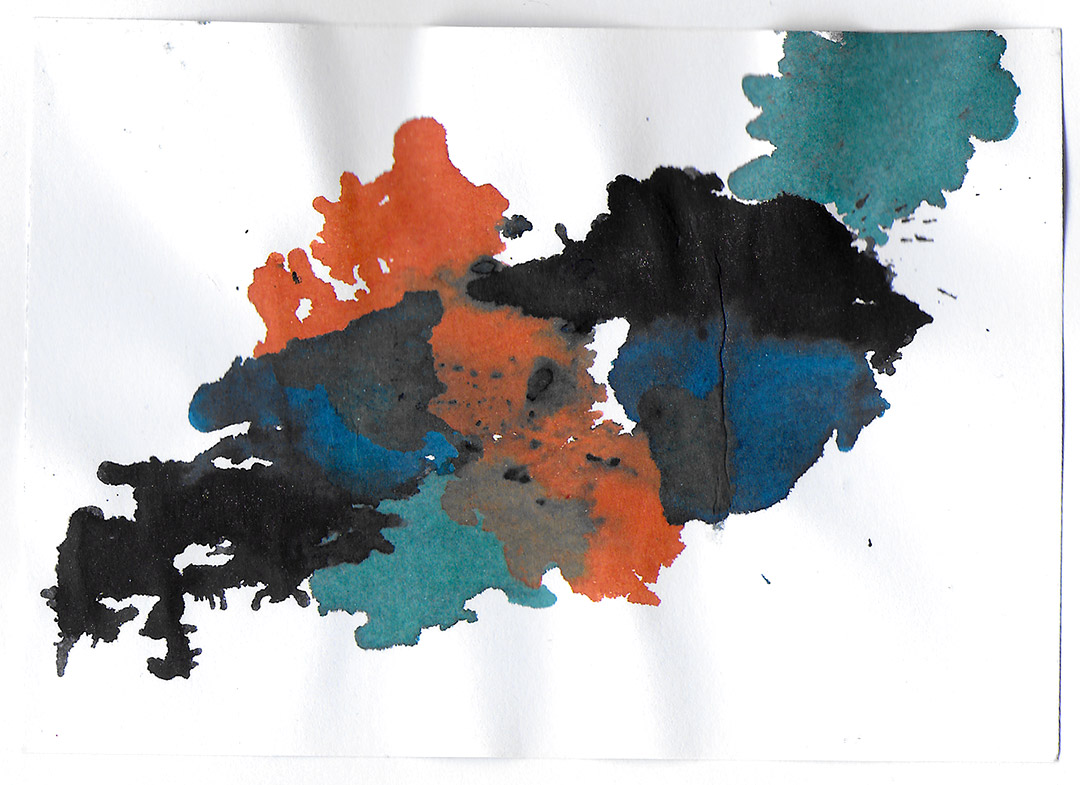
    fig 1

    Songs and Music

    I’m still working on the tracks that, I hope, will become a new album in the near future. I have a working list of ten tracks in various stages of (de)composition.

    There’s also a soundtrack being composed inspired by the word emerge… it’s all butterflies and stuff… what do butterflies sound like, and what is the sound of them emerging from their cocoon? I’m doing a video series about that process, and the first video in the playlist is here.

    Art and images

    Did an ink splat to tie in with this week’s creative prompt. That’s fig 1 at the top of the page.

    Journals and planners

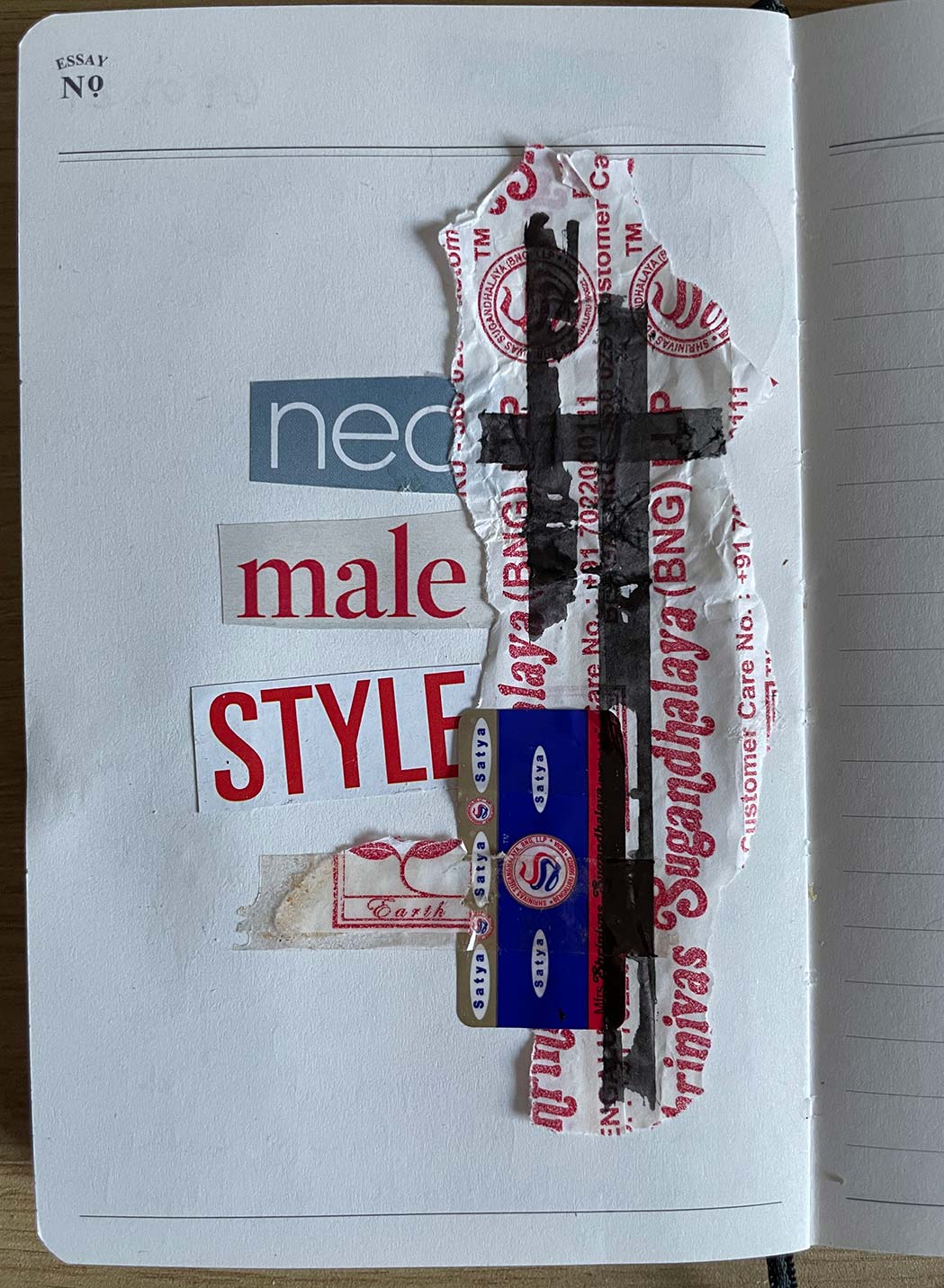
    fig 2

    Did a little page for my art/thoughts/meme journal, I don’t have a real name for this journal. It is a part image, part word journal, and I am using my Iconic journal.

    Words and stories

    When it comes to text, blog posts and marketing have been in the work/freelance pile this week. I’d love to spend more time writing fiction… but my desire is obviously not enough at the moment to actually do anything about it.

    Inspiration

    Currently reading:

    The Saints of Salvation by Peter F Hamilton. This is the final book in his recent Salvation Sequence Trilogy. I am thoroughly enjoying these. And my favourite line this week, which also gives a glimpse at what the content is…

    We just don’t have the psychology to deal with Armageddon

    The Saints of Salvation Peter F Hamilton

    Currently listening:

    The Moon is blue by Future Islands

    From Bills & Aches & Blues (40 years of 4AD). This is a compilation album celebrating 40 years of 4AD. And that makes me feel even older, seeing as I have a few very early 4AD recordings on original vinyl. I love Future Islands and I love Colourbox, who originally recorded The moon is blue. And this is a pretty good cover version.


    Thank you for reading this post. Please share your thoughts in the comment section below.
    namaste
    d
    xox

    If you enjoyed this post please support my writing by making a donation of any amount.

    Sign up for my (ir)regular newsletter to keep up to date with my creative adventures, including special offers, and join me on Instagram | YouTube | Twitter | Pinterest
  • Remember to turn up – Vlog

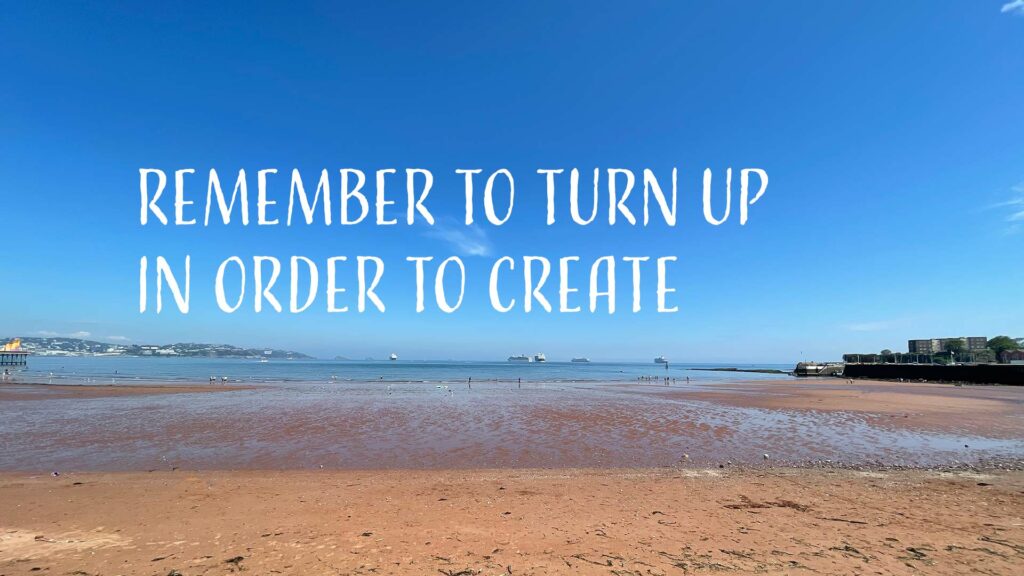
    A vlog update where I use remembering to turn up to create as an excuse to take a walk to the beach.