• This week’s, the journal and planner update vlog goes on a little detour. It’s been a bit of a distracting week in one way or another, so I distract myself with a little creative play. Gesso is involved as I delve into the world of Art Trading Cards and my junk journal, before getting back…

    Read more…

  • A Fiction Writing Prompt to stretch the literary muscles. No rules. No word counts. Simply write and explore. I opened the doors and stepped out on the balcony. The view was amazing, but it was the air that took my breath away Writing Prompt Expanded This week’s Friday Fiction Writing Prompt is all about comparison.…

    Read more…

  • Read more…

  • Planner and journal vlog update. A look into my bullet journal(s) and junk journal. I seem to have run into a problem with my set-up. Instead of capturing things in my ‘daily’ journal, I have been accruing a number of scrap pieces of paper. It feels like I am being called to an all-in-one journal……

    Read more…

  • A Fiction Writing Prompt to stretch the literary muscles. No rules. No word counts. Simply write and explore. I squeezed, nothing. I pressed again, still nothing. Now, I was getting desperate Writing Prompt Expanded This week’s Friday Fiction Writing Prompt is about frustration. Now you might feel there is enough frustration in your life already…

    Read more…

  • This week’s vlog shows how I create my weekly bullet journal layout. I use stickers, scraps of paper and plenty of glue stick. I show how I go from a blank page to a weekly layout for my current bullet journal set-up. And I chat as I go along. Please subscribe if you like the…

    Read more…

  • What Perfectionism Has Actually Cost Me

    What Perfectionism Has Actually Cost Me

    What perfectionism actually taught me - text

    I used to think perfectionism was a virtue. A sign that I cared. That I had standards. That I wasn’t willing to put out work that wasn’t good enough.

    It took a long time to recognise it for what it actually was: Not caring about quality, but a fear of being judged for not having it.

    The Disguise

    Perfectionism is good at pretending to be something else. It wears the costume of high standards and attention to detail. It sounds like: I want this to be right. It sounds like: I’m not ready yet. It sounds like: just a bit more work and it’ll be there.

    Brené Brown has spent decades researching and studying shame and vulnerability, and her finding on perfectionism is worth sitting with: “Perfectionism is not the same thing as striving to be your best… Perfectionism is the belief that if we do things perfectly and look perfect, we can minimise or avoid the pain of blame, judgment, and shame.”

    Not a quality standard. A defensive response. Armour.

    The crucial distinction is in what drives the behaviour. Healthy striving is internally driven: you want to make something better because it matters to you. Perfectionism is externally driven: you’re protecting yourself from how it might be received. One pushes you forward. The other keeps you still.

    And because it disguises itself as caring, it’s easy to live with for a long time without noticing what it’s actually doing. “My perfectionism is only like that because it cares for me.”

    What It Costs

    The immediate cost is obvious enough: delay. The project that sits at ninety percent for months. The song that’s been “almost finished” for longer than you’d like to admit. The piece of writing that never gets sent.

    But the longer-term cost is harder to see and harder to recover from.

    Research on the perfectionism-procrastination loop shows something that feels almost cruel: the avoidance that perfectionism produces is most likely to guarantee the very failure it’s trying to prevent. You delay to avoid the judgment that would come from imperfect work. But the delay produces no work. Which is a worse outcome than imperfect work would have been.

    Beyond the individual project, there’s confidence. Every shelved piece of work quietly confirms a story: you’re not ready. You’re not good enough yet. The work isn’t there. And since perfectionism keeps you from finishing, the evidence for that story keeps mounting. Not because you’re not capable, but because you never find out.

    Then there’s the creative identity. Creatives need output the way athletes need reps. Not because every piece has to be good, but because making things is how you develop. Perfectionism starves that process. The songs that never get finished don’t teach you what finishing them would have taught you. The chapters that stay in draft don’t develop the skill that getting them out of draft would develop. The work compounds. Or it doesn’t.

    The perfectionist’s shelf: a graveyard of almost-finished things, each one slightly more discouraging than the last.

    The Long Game

    The cruelest part of perfectionism is how invisible its cost is while it’s accumulating.

    You don’t feel the missing output in any given week. You don’t notice the confidence slowly draining. The creative muscles aren’t obviously getting weaker: you just gradually stop reaching for the work.

    Over years, the pattern settles in. Not a dramatic failure, but a quiet narrowing. The range of things you’re willing to try gets smaller. The gap between what you can imagine and what you’ll actually attempt gets wider. Brené Brown’s research notes that perfectionism is “correlated with depression, anxiety, addiction, and life paralysis: missed opportunities.” Not because it means you care, but because it means you stop.

    That’s the long-term cost. Not any single unfinished project. The accumulated weight of a creative life spent waiting to be ready… an uncreative life.

    What to Do Instead

    The shift isn’t lowering your standards. It’s separating the generating stage from the evaluating stage.

    Make the imperfect thing. Finish it to a reasonable standard. Share it. The judgment you were protecting yourself from is almost never as damaging as the paralysis. And the work that exists, with all its flaws, is more useful to you and to anyone watching than the perfect work that stays inside your head.

    Progress is the practice. The imperfect output teaches you what the withheld output never will.

    Share something this week that isn’t quite ready. See what happens.


    Thank you for reading this post. Please share your thoughts in the comment section below.
    namaste
    d
    xox

    If you enjoyed this post please support my writing by making a donation of any amount.

    Sign up for my (ir)regular newsletter to keep up to date with my creative adventures, including special offers, and join me on Instagram | YouTube | Twitter | Pinterest
  • Stop Waiting for a Free Afternoon: Why 20 Minutes Is Enough to Create

    Stop Waiting for a Free Afternoon: Why 20 Minutes Is Enough to Create

    Stop waiting for a free afternoon: why 20 minutes is enough to create - text

    There’s a perfect zone where creative work only happens when the conditions are right. A clear day. A tidy workspace. A long, uninterrupted stretch of time with nothing else pressing. Creative heaven.

    And there’s a place that it happens anywhere. In the gap before the school run. On a lunch break. In twenty minutes before the rest of the house wakes up.

    Many of the people who consistently make things are the second type. Not because they have more time. Because they stopped waiting for the right conditions and started using the ones they had.

    The Myth of the Long Session

    The assumption that creative work requires long, uninterrupted sessions is one of the most effective ways to never make anything.

    Because long, uninterrupted sessions are rare. Life doesn’t schedule itself around your creative ambitions. And when the window doesn’t open, the work doesn’t happen.

    What fills the gap is a specific kind of guilt: I should be working. But the logic running underneath it is: I don’t have long enough to make it worth starting. So nothing happens.

    The belief that short sessions don’t count is costing more creative output than almost anything else. Not because short sessions are ideal, but because they’re available while the long session often isn’t.

    And here’s the thing: science suggests the short session might not be the compromise you think it is.

    What the Research Actually Shows

    The well known landmark study by Baddeley and Longman from 1978, trained postmen to type using different session lengths. Those taught in shorter sessions spread across multiple days didn’t just keep up with those who had longer, massed sessions. They outperformed them, with better accuracy and speed, and the advantage grew over time.

    This is distributed practice: the principle that many short sessions, spaced across time, consistently outperform fewer long ones for skill retention and development. It’s been replicated across dozens of skills and contexts since, and it holds up.

    The reason seems to be consolidation: the brain processes and integrates what it has practised during the rest periods between sessions. A long session can accumulate a lot of repetition without giving the brain time to absorb it. Short sessions, by contrast, force exactly the kind of spaced repetition that produces durable skill.

    This applies directly to creative work. Twenty minutes of focused writing, playing, drawing, or editing, done consistently, will develop your skills faster than the occasional marathon session that gets squeezed in when life allows. Find these 20 minute creative habit nooks.

    Bonus thought: twenty focused minutes beats two distracted hours every time. The constraint forces the focus.

    The Hemingway Trick (And the Science Behind It)

    There’s a practical technique that makes short sessions even more effective, and it’s been in use since long before anyone had a name for it.

    Ernest Hemingway famously stopped writing each day at a point where he knew exactly what came next. Not at the end of a section. Not at a natural stopping point. In the middle of something. Sometimes mid-sentence.

    The reason this works is the Zeigarnik effect: a 1927 discovery by psychologist Bluma Zeigarnik showing that the brain holds on to unfinished tasks far more persistently than completed ones. Incomplete things create a cognitive pull. They stay active in the background.

    Stopping in the middle of a session, with clear momentum still in the work, means the creative thread stays live between sessions. You’re not walking away from a completed creative idea; you’re leaving a door open. And when you come back, you’re not starting cold. You’re completing something that’s already in motion, already in the creative flow.

    This transforms the short session from a frustrating limitation into a deliberate technique. You’re not squeezing in twenty minutes. You’re setting up the next twenty minutes before you leave.

    What to Do Instead

    Three practical shifts that make short sessions work:

    Make the session specific before you start. “Work on the song” is too open. “Finish the chorus melody” or “write the next 200 words” gives the twenty minutes a clear edge. You spend the time on the work, not on deciding what the work is. And provides a tangible outcome.

    Start before you’re ready. The warm-up is part of the session. The first five minutes of any creative session are usually the most resistant. Push through them rather than waiting for inspiration to arrive first: it rarely does.

    Stop with something to return to. Take the Hemingway approach. Don’t finish the thought. Leave a note for your next session: where you are, what comes next, what you were trying to do. The Zeigarnik effect will do the rest.

    Twenty minutes, done consistently and deliberately, is not a substitute for longer creative work. But it’s not a consolation prize either. It’s a different shape of the same thing. And it’s available today, even if, or when, the free afternoon isn’t.


    Thank you for reading this post. Please share your thoughts in the comment section below.
    namaste
    d
    xox

    If you enjoyed this post please support my writing by making a donation of any amount.

    Sign up for my (ir)regular newsletter to keep up to date with my creative adventures, including special offers, and join me on Instagram | YouTube | Twitter | Pinterest
  • Copying Isn’t Cheating. It’s How Creativity Starts.

    Copying Isn’t Cheating. It’s How Creativity Starts.

    Copying isn't cheating. It's how everyone starts - text and image of me in an art gallery

    There is a belief about being creative that treats imitation as some sort of failure of originality. Both by ourselves and by those “outside” watching. Copying is something to be embarrassed about. A phase to rush through and never mention.

    I want to make the case that this is completely backwards. Not just as encouragement, but as a description of how creative development actually works. Copying isn’t the shameful opposite of real creative work. It’s the foundation it’s built on.

    Everyone You Admire Started This Way

    Hunter S. Thompson, one of the most distinctive voices in American journalism, spent years typing out other writers’ novels word for word. Not paraphrasing. Typing. He copied F. Scott Fitzgerald’s The Great Gatsby in full. He copied Hemingway’s A Farewell to Arms. He later explained: “If you type out somebody’s work, you learn a lot about it. Amazingly it’s like music… I wanted to learn from the best.”

    The Beatles spent years covering Chuck Berry, Little Richard, and every American rock and roll record they could find. At least fifteen Chuck Berry songs were in their set at various points. Paul McCartney learned his vocal style directly from Little Richard, who actually taught him the technique in person. They weren’t hiding the influence: they were studying it so thoroughly it became part of them.

    In visual art, copying the masters is still a formal part of training. Students in art schools spend hours in galleries reproducing works by Rembrandt, Vermeer, Velázquez: not to produce replicas, but to understand the choices behind them. The brushstroke, the composition, the light. You can’t learn that from observation alone.

    T.S. Eliot put it plainly, in a line that’s been repeated enough times to feel like a cliché but remains true: “Immature poets imitate; mature poets steal.” He meant that the deeper engagement, the one that actually moves your own work forward, is when you take something from another creative and make it genuinely yours. Not just a copy. A theft.

    Why It Works

    Copying forces you to understand the decisions, not just the results.

    When you listen to a song you love, or read a paragraph that works perfectly, or look at a photograph that lands exactly right, you’re experiencing the end product. The choices that created it are invisible. You feel the effect, but you don’t necessarily see the mechanism.

    When you copy, the mechanism becomes visible. You discover that the sentence works because of a specific rhythm, not just the words. The musical phrase works because of the note in the bass, not just the melody. The image works because of what’s out of frame, not just what’s in it.

    That discovery is the education. And it’s one you can only get by doing it, not by analysing from the outside.

    Bonus thought: copying with your hands is different from copying with your eyes. You learn different things depending on how you engage with the work.

    How You Stop Copying (And Why You Can’t Force It)

    So when do you stop imitating? When does the imitation phase end? Well, it’s not an exact science. You don’t decide when it ends. It ends when your influences have been so thoroughly absorbed that they stop showing up in your work as recognisable sources and start showing up as something else.

    Bob Dylan arrived in New York in 1961 sounding almost entirely like Woody Guthrie: same vocal style, same guitar approach, the same folk repertoire. He even visited Guthrie in hospital, learning directly from the source. The imitation wasn’t hidden or apologised for. It was thorough.

    Within a few years, Dylan had transformed that absorbed tradition into something that had never existed before: literary, surreal, electric, entirely his own. You couldn’t have predicted the destination from the starting point. What came out the other side was so distant from Guthrie that it barely seemed connected, yet it grew directly from that immersion.

    The Beatles absorbed their influences so completely that what came out the other side was something entirely their own. Thompson copied Fitzgerald and Hemingway so thoroughly that when he wrote, what emerged was unlike anything that had existed before. Not despite the copying. Because of it.

    The mistake is trying to skip this stage in the name of originality. Originality isn’t found by avoiding influence. It develops through it, over time, through enough output that the absorbed influences stop being visible and become something harder to name.

    What to Do Instead

    Stop hiding your influences. Name them, study them, engage with them seriously. The writers and musicians and artists you admire aren’t evidence of your lack of originality. They’re the raw material your originality will eventually grow from. I did this with David Bowie’s Heroes when I recorded my track We’re not actors. I think the influence is still a little raw, but I hope you might find a little art there if you listen.

    Pick one piece of work you genuinely love and study it closely. Not just how it makes you feel, but how it works. Copy it, if that’s the medium. Transcribe the chord progression. Sketch the composition. Type out the paragraph. See what you discover that you couldn’t see from the outside.

    And when your copy doesn’t quite match the original: pay attention to the space you have created. That’s not failure. That’s the beginning of your own thing.


    Thank you for reading this post. Please share your thoughts in the comment section below.
    namaste
    d
    xox

    If you enjoyed this post please support my writing by making a donation of any amount.

    Sign up for my (ir)regular newsletter to keep up to date with my creative adventures, including special offers, and join me on Instagram | YouTube | Twitter | Pinterest
  • The Mistake I Made Trying to Sound Professional

    The Mistake I Made Trying to Sound Professional

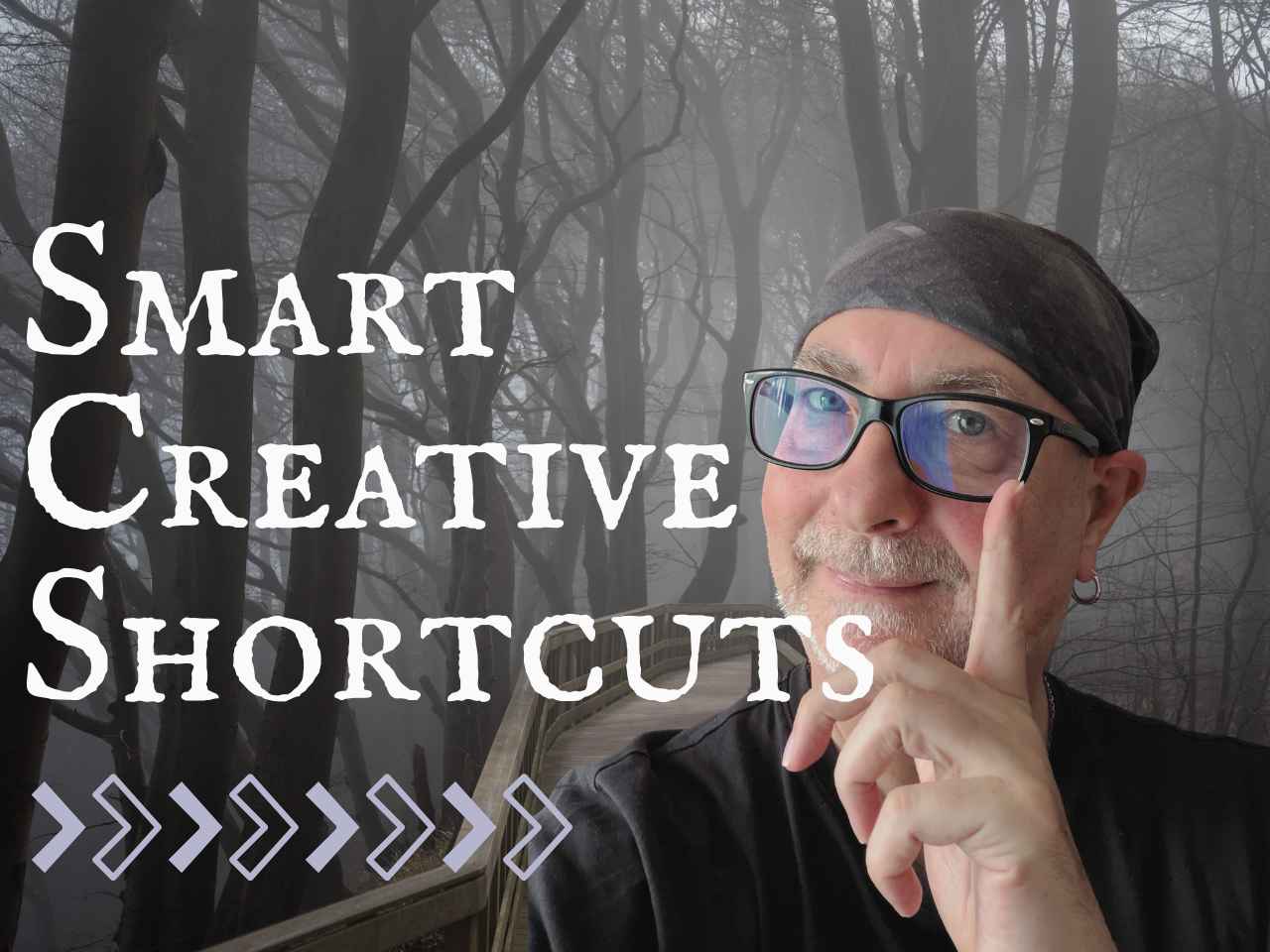
    The mistake I made trying to sound professional - text and image of me

    Early in my creative life, I was convinced that the gap between where I was and where I wanted to be was a technical one, a skill issue. Everything would be perfect If I could just get the sound right. Get the production to a certain standard. Write with more precision and polish. Sound more like the people I admired; Bowie et al.

    So I kept trying to sound professional before I had anything to say. And it nearly killed my output entirely.

    The Trap

    Here’s what “trying to sound professional” actually looks like in practice: you start a project and immediately start judging it against a finished standard. Every rough note, every awkward sentence, every imperfect first take gets filtered through the question “does this sound like the real thing?”, or “does this sound like x, or the xx or Charlie XCX?” And when the answer is no, which it almost always is early on, you tighten up. You second-guess. You redo. You abandon.

    The pressure to perform professionally before you’ve had the chance to play loosely is one of the most effective ways to grind creative output to a halt. Not because the standard is wrong, but because the timing is.

    This isn’t just music. Writers do it too: drafting with one eye on how a published author would phrase the same thought. Painters and illustrators comparing their rough studies to finished work. Photographers chasing a polished aesthetic before they’ve worked out what they’re actually drawn to. Filmmakers trying to match production values they admire before they’ve found their eye. The specific discipline doesn’t matter. The pattern is the same.

    The Gap (And Why It’s Normal)

    Radio producer Ira Glass has one of the most honest things I’ve ever heard anyone say about early creative work. In a now-famous interview, he described what he calls the taste gap: the space between what you can see and what you can make.

    When you’re drawn to creative work, it’s usually because you have taste. You know what good looks like. And that taste is exactly what makes your early work so frustrating to you, because you can hear and see the gap clearly.

    But the only way to close the gap is volume. More work. Rough work. Work that isn’t trying to be professional yet. Glass’s point was that every creative person he knew who ended up making genuinely interesting work went through years of this phase, and the ones who got through it were the ones who kept going rather than stopping to polish.

    The professional sound, or voice, or eye, develops through the accumulation of output. Not through trying to skip the messy middle.

    Style Is a Side Effect

    There’s a related idea in Austin Kleon’s book Steal Like an Artist. His argument is that style doesn’t come from trying to find your voice: it comes from working, imitating, failing to copy your influences perfectly, and discovering what’s left over when you can’t quite pull it off. Those imperfections, those places where your version diverges from the thing you were trying to make, are where your actual style lives.

    Your failed attempts at professional polish are more authentically yours than the polished imitation would ever have been.

    I would even say that, art is found in imperfection.

    Think about the creative voices you find most distinctive: the writers with a particular rhythm, the musicians with an unmistakable sound, the filmmakers with a visual signature. Almost none of them got there by aiming for it directly. They got there by making a lot of work and finding themselves in the gap between what they were trying to do and what they actually did.

    Bonus thought: looseness in early drafts often produces the most interesting ideas. The pressure to be polished cuts off the unexpected detour that might have led somewhere good.

    What to Do Instead

    The practical shift is simpler than it sounds. Give the early stage of any project permission to be rough. Not forever, but for long enough that the ideas can develop without being filtered through a standard they can’t yet meet.

    Judge early work by volume, not quality. The question in the first draft, the first session, the first sketch, is not “is this good?” The question is “did I make something?” The refinement comes later. The polishing comes later. The professional standard can be applied at the editing stage, not the generating stage.

    And when you feel the pull to tighten up before you’ve loosened off: that’s the moment to notice. It’s usually fear dressed up as standards.

    The most professional thing you can do early on is keep going.Sources:Reuse notes: Early creative work, style development, perfectionism, all creative disciplines


    Thank you for reading this post. Please share your thoughts in the comment section below.
    namaste
    d
    xox

    If you enjoyed this post please support my writing by making a donation of any amount.

    Sign up for my (ir)regular newsletter to keep up to date with my creative adventures, including special offers, and join me on Instagram | YouTube | Twitter | Pinterest
  • Why Fewer Tools Makes You a Faster Creative

    Why Fewer Tools Makes You a Faster Creative

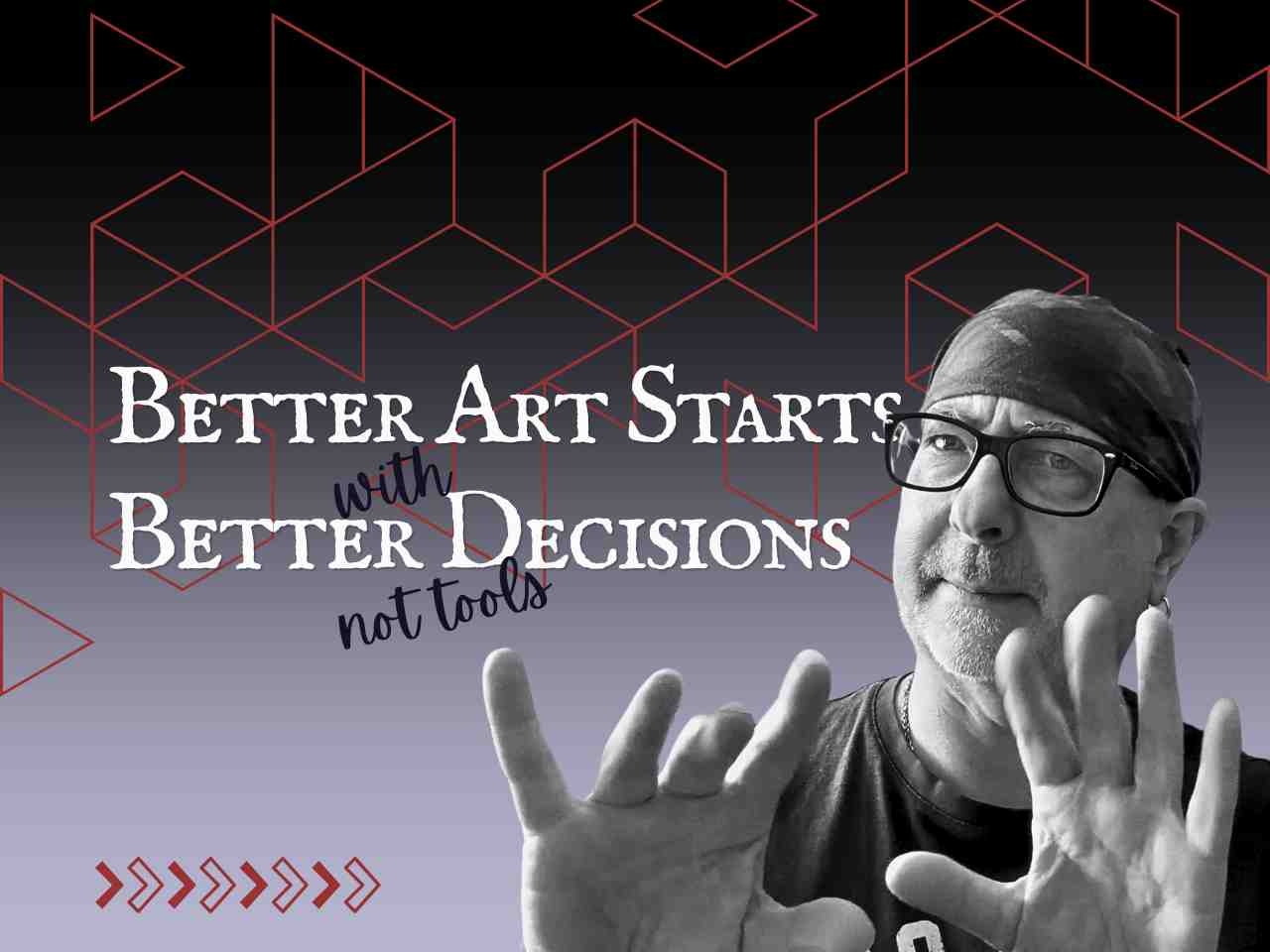
    why fewer tools make you a faster creative - text

    There’s a version of creative productivity that looks like this: the right plugin for every job, a different app for every stage of the process, a growing library of presets, brushes, fonts, and gear for every possible situation.

    And there’s a version that looks like this: a handful of tools you know so well you never have to think about them.

    The second one is faster. By a lot.

    Not because it’s simpler. Because familiarity is a speed multiplier. And the more you spread your time across tools you haven’t fully learned, the less of that multiplier you get.

    Unfortunately, I seem wired to strive for the first 😭.

    The Cost of Starting From Scratch

    Every unfamiliar tool has a startup cost. Before you’ve made a single creative decision, you’re navigating menus, watching tutorials, second-guessing settings, wondering which of the twelve export options you’re supposed to use. Sound familiar? (As an aside, I just switched back to Final Cut for editing my videos… and all the above were all too real.)

    That cost compounds across a session. It’s not just the time. It’s the mental load. You’re using cognitive energy on the tool itself, energy that isn’t available for the work.

    The familiar tool has none of that. You open it and you’re already in. The producer who knows their synth inside out doesn’t spend the first twenty minutes of a session figuring out the routing. The photographer who knows their one camera body doesn’t fumble with the menu in the moment the light is right. The writer who knows their software doesn’t lose a thought to formatting.

    The tool disappears. The work begins.

    That’s not a minor efficiency saving. It’s the difference between a session that builds momentum and one that never quite gets going.

    What Mastery Actually Feels Like

    There’s a well-studied psychological state called flow: the experience of being so absorbed in a task that self-consciousness drops away and the work seems to happen almost automatically. Psychologist Mihaly Csikszentmihalyi spent decades researching it, and one consistent finding is that flow is most accessible to people with high levels of skill in what they’re doing.

    The reason is automaticity. When the mechanical aspects of a skill become automatic, they stop drawing on conscious attention. The musician stops thinking about the chord shapes and starts thinking about the feel of the phrase. The painter stops calculating the colour mix and starts feeling the composition. The editor stops finding the shortcut and starts making the cut.

    It’s like creative muscle memory

    This is what experienced creatives mean when they talk about a tool “getting out of the way.” It’s not that the tool becomes invisible. It’s that you’ve internalised it. And once that happens, the cognitive space that was occupied by the mechanics is free for actual creative thinking – you can read more about creative flow here.

    You can’t internalise ten tools at once. Your time is finite. Depth with fewer tools gets you to automaticity. Breadth across many keeps you at the learning stage indefinitely.

    Bonus thought: the tools you use most probably have shortcuts you haven’t learned yet. Those are free speed.

    The Compounding Return of Depth

    There’s simple math to this that’s easy to miss.

    Five hundred hours with one tool builds a foundation. Every hour adds to the previous ones. The knowledge compounds. You get faster, more intuitive, and more creative with it, because you’re not spending any time relearning.

    Five hundred hours split across ten tools gives you fifty hours with each. Fifty hours is enough to get started. It’s not enough to get fluent.

    Fluency is where the interesting creative decisions happen. It’s where you stop asking “how do I do this?” and start asking “what should this be?” That shift is where the creativity lives.

    Writers who commit to one editing tool learn the quirks, the keyboard shortcuts, the structural features, the workarounds. Filmmakers who commit to one editing software develop an intuition for the timeline (as I found out above!). Illustrators who stick to a limited palette learn what that palette can do that a wider one can’t.

    The depth pays off in ways that are hard to predict until you’re there. But the path there is consistent: stay longer with less.

    What to Do Instead

    None of this is an argument for never trying a new tool. New tools can solve real problems. But there’s a useful question to ask before you start exploring: what specific gap in my current workflow would this fill?

    If you can name it clearly, that’s worth investigating. If the answer is closer to “I just want to try something different”… that curiosity is fine, but treat it as exploration, not an upgrade to your core process.

    The more practical step is an honest audit. How many tools did you actually use in the last month? Not ones you own or have installed. Ones you used. For most people, the answer is a small number. Those are your core tools. Go deeper with them.

    Mastery isn’t about owning fewer things. It’s about knowing fewer things well enough that they stop slowing you down.SourcesReuse notes: Tools, mastery, workflow, flow states, speed, all creative disciplinesLink to blog in bio when post goes live


    Thank you for reading this post. Please share your thoughts in the comment section below.
    namaste
    d
    xox

    If you enjoyed this post please support my writing by making a donation of any amount.

    Sign up for my (ir)regular newsletter to keep up to date with my creative adventures, including special offers, and join me on Instagram | YouTube | Twitter | Pinterest

  • The Next Tool Won’t Fix It: Why More Gear Doesn’t Make Better Creative Work

    The Next Tool Won’t Fix It: Why More Gear Doesn’t Make Better Creative Work

    Why more gear doesn't make better creative work - the next tool won't fix it - text

    There’s a moment most of us creative people get. You’re stuck on something. The project isn’t coming together the way you imagined. And then it occurs to you: maybe the problem is the tool I am using. That new shiny thing they are raving about on the socials could be the solution.

    Maybe the DAW is limiting you. Maybe the right plugin would unlock something. Maybe if you had better brushes, a different camera, that specific notebook everyone keeps recommending…

    I’ve been here more times than I’d like to admit and my credit card company is happy to support me in my endeavours. But I’ve learned that getting more stuff is almost always wrong.

    The Acquisition Trap

    There’s a term in music circles for this: Gear Acquisition Syndrome, or GAS. It’s been studied seriously enough to warrant an academic book on the subject, Gear Acquisition Syndrome: Consumption of Instruments and Technology in Popular Music by Jan-Peter Herbst and Jonas Menze. The research describes it as the “unrelenting urge to buy and own instruments and equipment as an anticipated catalyst of creative energy.”

    The key word there is anticipated. The creative energy doesn’t arrive with the purchase. We anticipate that it will.

    And it makes psychological sense. Buying new gear triggers a dopamine release. The anticipation of what you’ll make with it is genuinely exciting. But that feeling is about the acquisition, not the output. Once the novelty settles, the work is still the work. The blank page is still blank. The same creative friction you were feeling before is still there, waiting.

    Musicians aren’t alone in this. Writers have the equivalent in the perfect notebook, the right pen, the new app that’s going to change their process. Photographers chase camera upgrades. Filmmakers justify new lenses. Artists accumulate materials they’ll get around to using – but how much of the stuff in that IKEA cart is being used! The specific tools differ. The pattern is the same.

    Why More Choice Makes It Harder

    Even when tool acquisition isn’t the problem, having too many options still is. Psychologist Barry Schwartz built an entire framework around this in The Paradox of Choice: the more options we have, the harder it becomes to make decisions, and the less satisfied we tend to be with the ones we do make.

    In creative work, that friction is constant. Every session that begins with “which tool do I use for this?” is a session that’s already losing momentum before anything has been made. Every plugin folder with 200 options, every brush set with unlimited variations, every app with ten different ways to format the same thing… all of it adds decision overhead to a process that needs to flow.

    The familiar tool removes that overhead entirely. You pick it up and you’re already in the work. That’s not a small thing.

    Bonus tip: most apps have a favourites option, use it for the settings you always use

    What the Tool Is Actually Promising

    Here’s what I think is really going on with the acquisition impulse: tools promise to solve a creative problem, but the problem is almost never the tool.

    The problem is usually the idea. Or the skill. Or the discipline to sit with something uncomfortable long enough for it to become something good.

    A new plugin can’t fix a weak melody. A new camera can’t fix a weak composition. A new notebook can’t fix a writing block. The tool is neutral. It does what you tell it to do. And if you haven’t got something to tell it yet, more sophisticated tools just give you more sophisticated ways of avoiding the work, and at often considerable financial cost.

    Some of the most distinctive creative voices in any discipline got there with very limited tools. Early hip-hop producers worked with one sampler and found ways to make that constraint into a sound. Jack White famously limited himself to recording on three tracks, not because he couldn’t afford more, but because the limitation forced decisions that shaped his music. Countless painters and writers and filmmakers have produced their most personal work with the simplest setups, because the simplicity kept the focus on what actually mattered.

    The tool doesn’t make the work. The work makes the tool worthwhile.

    What to Do Instead

    None of this means never buy new tools, upgrade your setup, or explore new software. That can be genuinely useful. But there’s a difference between acquiring tools to solve a specific, identified creative need and acquiring tools because you’re stuck and hoping something external will unstick you.

    The more useful question, when you feel the pull toward the next tool, is: what is this purchase actually solving? If you can name a specific, concrete limitation in your current work(flow) that this new thing will address, that’s a reasonable conversation to have with yourself. If the honest answer is closer to “I don’t know, I just feel like this would help”… well, perhaps the new shiny isn’t the solution for when you’re stuck.

    The tools you already have are almost certainly enough. The question is whether you’re using them as well as you could.


    Thank you for reading this post. Please share your thoughts in the comment section below.
    namaste
    d
    xox

    If you enjoyed this post please support my writing by making a donation of any amount.

    Sign up for my (ir)regular newsletter to keep up to date with my creative adventures, including special offers, and join me on Instagram | YouTube | Twitter | Pinterest