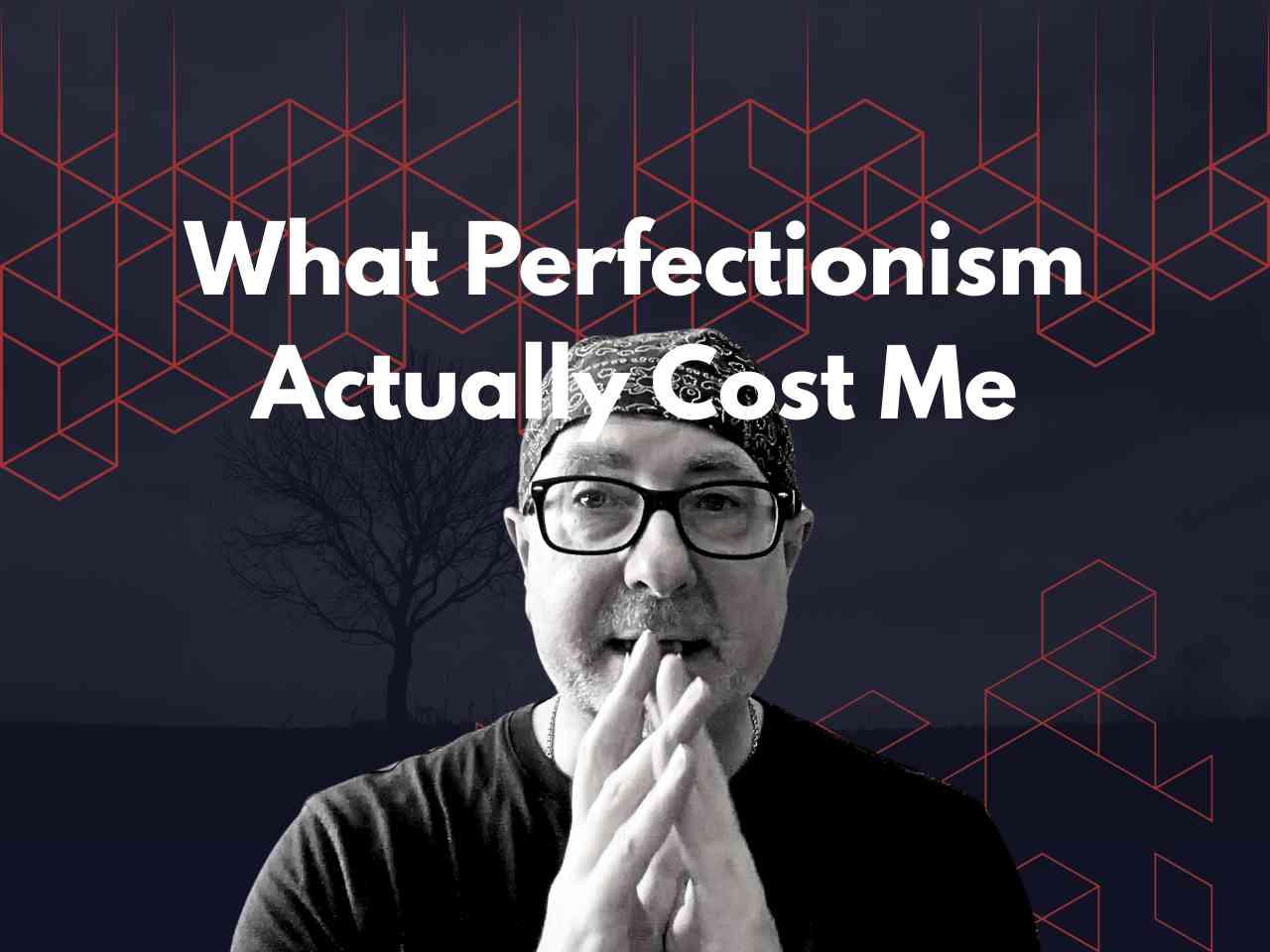
I used to think perfectionism was a virtue. A sign that I cared. That I had standards. That I wasn’t willing to put out work that wasn’t good enough.
It took a long time to recognise it for what it actually was: Not caring about quality, but a fear of being judged for not having it.
The Disguise
Perfectionism is good at pretending to be something else. It wears the costume of high standards and attention to detail. It sounds like: I want this to be right. It sounds like: I’m not ready yet. It sounds like: just a bit more work and it’ll be there.
Brené Brown has spent decades researching and studying shame and vulnerability, and her finding on perfectionism is worth sitting with: “Perfectionism is not the same thing as striving to be your best… Perfectionism is the belief that if we do things perfectly and look perfect, we can minimise or avoid the pain of blame, judgment, and shame.”
Not a quality standard. A defensive response. Armour.
The crucial distinction is in what drives the behaviour. Healthy striving is internally driven: you want to make something better because it matters to you. Perfectionism is externally driven: you’re protecting yourself from how it might be received. One pushes you forward. The other keeps you still.
And because it disguises itself as caring, it’s easy to live with for a long time without noticing what it’s actually doing. “My perfectionism is only like that because it cares for me.”
What It Costs
The immediate cost is obvious enough: delay. The project that sits at ninety percent for months. The song that’s been “almost finished” for longer than you’d like to admit. The piece of writing that never gets sent.
But the longer-term cost is harder to see and harder to recover from.
Research on the perfectionism-procrastination loop shows something that feels almost cruel: the avoidance that perfectionism produces is most likely to guarantee the very failure it’s trying to prevent. You delay to avoid the judgment that would come from imperfect work. But the delay produces no work. Which is a worse outcome than imperfect work would have been.
Beyond the individual project, there’s confidence. Every shelved piece of work quietly confirms a story: you’re not ready. You’re not good enough yet. The work isn’t there. And since perfectionism keeps you from finishing, the evidence for that story keeps mounting. Not because you’re not capable, but because you never find out.
Then there’s the creative identity. Creatives need output the way athletes need reps. Not because every piece has to be good, but because making things is how you develop. Perfectionism starves that process. The songs that never get finished don’t teach you what finishing them would have taught you. The chapters that stay in draft don’t develop the skill that getting them out of draft would develop. The work compounds. Or it doesn’t.
The perfectionist’s shelf: a graveyard of almost-finished things, each one slightly more discouraging than the last.
The Long Game
The cruelest part of perfectionism is how invisible its cost is while it’s accumulating.
You don’t feel the missing output in any given week. You don’t notice the confidence slowly draining. The creative muscles aren’t obviously getting weaker: you just gradually stop reaching for the work.
Over years, the pattern settles in. Not a dramatic failure, but a quiet narrowing. The range of things you’re willing to try gets smaller. The gap between what you can imagine and what you’ll actually attempt gets wider. Brené Brown’s research notes that perfectionism is “correlated with depression, anxiety, addiction, and life paralysis: missed opportunities.” Not because it means you care, but because it means you stop.
That’s the long-term cost. Not any single unfinished project. The accumulated weight of a creative life spent waiting to be ready… an uncreative life.
What to Do Instead
The shift isn’t lowering your standards. It’s separating the generating stage from the evaluating stage.
Make the imperfect thing. Finish it to a reasonable standard. Share it. The judgment you were protecting yourself from is almost never as damaging as the paralysis. And the work that exists, with all its flaws, is more useful to you and to anyone watching than the perfect work that stays inside your head.
Progress is the practice. The imperfect output teaches you what the withheld output never will.
Share something this week that isn’t quite ready. See what happens.

Thank you for reading this post. Please share your thoughts in the comment section below.
namaste
d
xox
If you enjoyed this post please support my writing by making a donation of any amount.
Sign up for my (ir)regular newsletter to keep up to date with my creative adventures, including special offers, and join me on Instagram | YouTube | Twitter | Pinterest