Tag: productivity

  • What I Stopped Doing That Improved My Work Immediately

    What I Stopped Doing That Improved My Work Immediately

    What I Stopped Doing That Improved My Work Immediately - text

    Most creative advice is about what to add. A new technique. A new process. A new habit. The assumption is always that progress comes from doing more, learning more, trying more. It’s consumerism’s gift to the masses!

    But what if some of the things already in your workflow are the problem?

    Jim Collins, author of Good to Great, argues that the “stop doing” list is as important as the to-do list. His research into high-performing organisations found they were as disciplined about what they eliminated as what they pursued.

    “They displayed a remarkable discipline to unplug all sorts of extraneous junk.”

    The same principle applies to creative practice. Not everything you’re currently doing is helping. Some of it is actively in the way.

    Here are three things I stopped doing that made an immediate difference. They apply across every creative discipline I know.

    Switching Modes Mid-Session

    There are two fundamentally different mental states in creative work: the generative mode, where you’re making something, and the evaluative mode, or evaluating, where you’re judging it. They feel like the same thing, but they’re not. And trying to do them at the same time is one of the most effective ways to miss the mark on both.

    Checking your stats mid-session is evaluating. Seeking feedback before something is finished is evaluating. Scrolling through other people’s work while you’re supposed to be making yours is evaluating. All of these pull you out of the generative state, and research on context switching shows it takes an average of 23 minutes to fully refocus after each interruption. In a 60-minute session, one distraction can cost you nearly half of it. How much?!?

    When I stopped checking anything during a creative session, the quality of the time in that session changed. Not the length of it. The depth.

    The fix is structural, not motivational: close the tabs. Turn off notifications. Put the phone in another room. Make evaluation mode physically unavailable during the making window. I use focus modes on the Mac. I have separate focus modes for music and writing. These hide the apps, and distractions that I don’t need.

    This applies equally to the musician resisting the urge to check streams mid-session, the writer who keeps re-reading yesterday’s chapter instead of moving forward, the painter who stops to photograph and post every stage, and the filmmaker who reviews rushes before the shoot is finished. All those are valid actions, but not when you need to be in the flow

    Starting Before I’d Finished

    Creative work has a gravitational pull toward new beginnings. The new song idea, the new chapter concept, the new project: all of them have a shine that the project currently in progress has lost. The work-in-progress is familiar. The new idea is possibility.

    “Oh shiny”

    The problem is the pile that builds up. Every unfinished project carries a small but persistent cognitive weight. You’re not consciously thinking about it, but it’s there, quietly occupying space. And the more unfinished things there are, the heavier the collective weight.

    There’s also the lesson you miss. Finishing is its own skill — completely distinct from starting — and you only develop it by doing it. The songwriter who has started forty songs and finished three hasn’t learned what finishing thirty-seven of them would have taught. The writer who abandons chapters when they get difficult hasn’t developed the muscle that pushing through would build. The photographer with a thousand ideas half-executed hasn’t found out what a single project taken to completion looks like.

    When I started finishing things before starting new ones, two things happened: the mental load got lighter, and the quality of what I completed got better. Because I had no choice but to work through the difficult middle rather than escape into a new beginning.

    Bonus thought: capturing the new idea somewhere safe so you don’t lose it, then deliberately returning to the current project, is a simple system that works. It might take a moment to get back into the “zone” (see above) but that is better than ditching the WIP

    Trying to Make Each Piece Do Everything

    This one is subtler and took me the longest to notice, and something I still struggle with. Every creative piece has a natural scope. A song does one thing well. A photograph captures one moment. A chapter moves one part of the story forward. The piece is what it is.

    The temptation is to load it with everything you want to say. The song that needs to be the definitive statement. The painting that has to contain every idea from the series. The blog post that tries to address every angle of the topic. The result is almost always a piece that does many things adequately and none of them well.

    Stopping this means accepting that the current piece doesn’t have to say everything. The other ideas belong in future work. Letting a piece be exactly what it is, without forcing it to be more, is one of the most practically useful things I’ve learned. It simplifies the making, and it improves the result.

    Removal isn’t always about eliminating bad habits. Sometimes it’s about releasing the expectations that are weighing the work down.

    Making Your Own Stop Doing List

    The habits worth stopping are different for everyone. What gets in the way of your particular creative workflow is personal. But the question is worth asking directly: what am I currently doing in my creative process that isn’t actually helping?

    Not what you should add. What you could remove.

    One session spent honestly auditing what’s in your workflow, and what it’s actually doing, is often more useful than a new technique or a new tool. The friction that’s slowing you down might already be there, waiting to be identified and removed.


    Thank you for reading this post. Please share your thoughts in the comment section below.
    namaste
    d
    xox

    If you enjoyed this post please support my writing by making a donation of any amount.

    Sign up for my (ir)regular newsletter to keep up to date with my creative adventures, including special offers, and join me on Instagram | YouTube | Twitter | Pinterest
  • Advice I’d Ignore: Why Not All Creative Wisdom Is Created Equal

    Advice I’d Ignore: Why Not All Creative Wisdom Is Created Equal

    Advice I'd ignore: why not all creative wisdom is created equal - text

    There’s no shortage of advice for creative people, I mean isn’t that part of what I do here!?! Us well-meaning, so called mentors, queue up to tell you how to write, compose, create, and think. Most of it is offered with genuine goodwill. Some of it is genuinely useful. But here’s the thing nobody tells you when you’re starting out: a lot of the advice floating around the creative world isn’t really advice at all: it’s one person’s process, dressed up as a universal truth. If you follow it blindly, it doesn’t just fail to help you. It can quietly hold you back, chip away at your confidence, and make you feel like you’re doing creativity wrong when actually you’re just doing it differently. Over my copious amount of years, I’ve followed advice that helped and advice that didn’t. The difference, I’ve learned, wasn’t in the advice itself — it was in knowing when to listen and when to politely ignore it.

    The Same Advice Can Be Precious or Poison

    Context is everything, and creative advice almost never comes with a label telling you who it’s actually for. “Write every day” is perhaps the most repeated piece of writing advice in existence. For some people, that daily discipline is transformative. For those who work in bursts, who need space between ideas, and who do their best thinking away from the desk, it can lead to guilt and mediocre output. The advice isn’t wrong. It’s just not universal. The same applies across every creative discipline. What works for a prolific genre novelist has no business being applied to an emotional songwriter wrestling with a single poetic lyric. Before you take any advice on board, ask, who is this actually designed for?

    Popular Doesn’t Mean Proven

    If a lie gets repeated often enough, it must be true, is ’t it? Likewise advice. Popularity is just a measure of how widely something gets shared, not how widely it gets tested. A lot of creative advice spreads because it sounds good, it’s quotable, it confirms what we already half-believe. “Kill your darlings.” “Show don’t tell.” “Inspiration is for amateurs.” These ideas have their place, but they’ve also been applied so broadly and so bluntly that they’ve become a kind of creative folklore, repeated automatically, rarely examined. The next time a piece of advice lands in front of you with the weight of obvious truth, ask, has this actually been proven, or has it just been said a lot?

    You Had to Fail With It First

    One thing that took me a long time to understand, and I still struggle with, is that some advice isn’t bad, it just found me at the wrong time. I’ve returned to ideas I once dismissed and found them suddenly useful. I’ve also seen processes that used to work bring me to a grinding halt. Experience doesn’t just teach you new things, it teaches you to read advice differently. You start to recognise when something is useful and when it’s a rule that’s quietly stopping you from developing your own instincts. Don’t dismiss advice wholesale., but keep revisiting it as you grow. Any single piece of wisdom is not fixed and permanent.

    Your Creative Wiring Is Not Theirs

    The person offering advice, however experienced and successful, is working from their own brain, their own temperament, their own way of seeing the world: and that includes me, here and now. That’s not a flaw, it’s just reality. It means you are always, to some degree, receiving advice filtered through someone else’s creative personality. If your process is slower, messier, more intuitive, more structured, more solitary, or more chaotic than theirs, some of what they tell you simply won’t translate. This is especially true of advice that’s framed as a cure for procrastination, perfectionism, or creative block! As I have found out to my own detriment… because those experiences are deeply personal, and the solutions are rarely one-size-fits-all.

    The Skill Is in the Filter, Not the Following

    Ultimately, the most important creative skill you can develop isn’t the ability to follow advice. It’s the ability to filter it. To take what fits, adapt what almost fits, and quietly set aside what doesn’t. And do this without feeling like you’ve failed or cheated. Every piece of advice you receive is an idea, not a directive. Try it, notice what happens, and trust your own results over someone else’s theory. The creatives I most admire aren’t the ones who found the right advice and followed it faithfully. They’re the ones who figured out which advice was actually meant for them, and had the confidence to leave the rest behind and walk their own creative path.

    So the next time someone tells you there’s only one way to write, to compose, to create, remember they’re describing their way. Your creative journey might look completely different. That’s not a problem to fix. That’s your creative identity doing exactly what it should.


    Thank you for reading this post. Please share your thoughts in the comment section below.
    namaste
    d
    xox

    If you enjoyed this post please support my writing by making a donation of any amount.

    Sign up for my (ir)regular newsletter to keep up to date with my creative adventures, including special offers, and join me on Instagram | YouTube | Twitter | Pinterest
  • Rewilding my Imagination and Creativity

    Rewilding my Imagination and Creativity

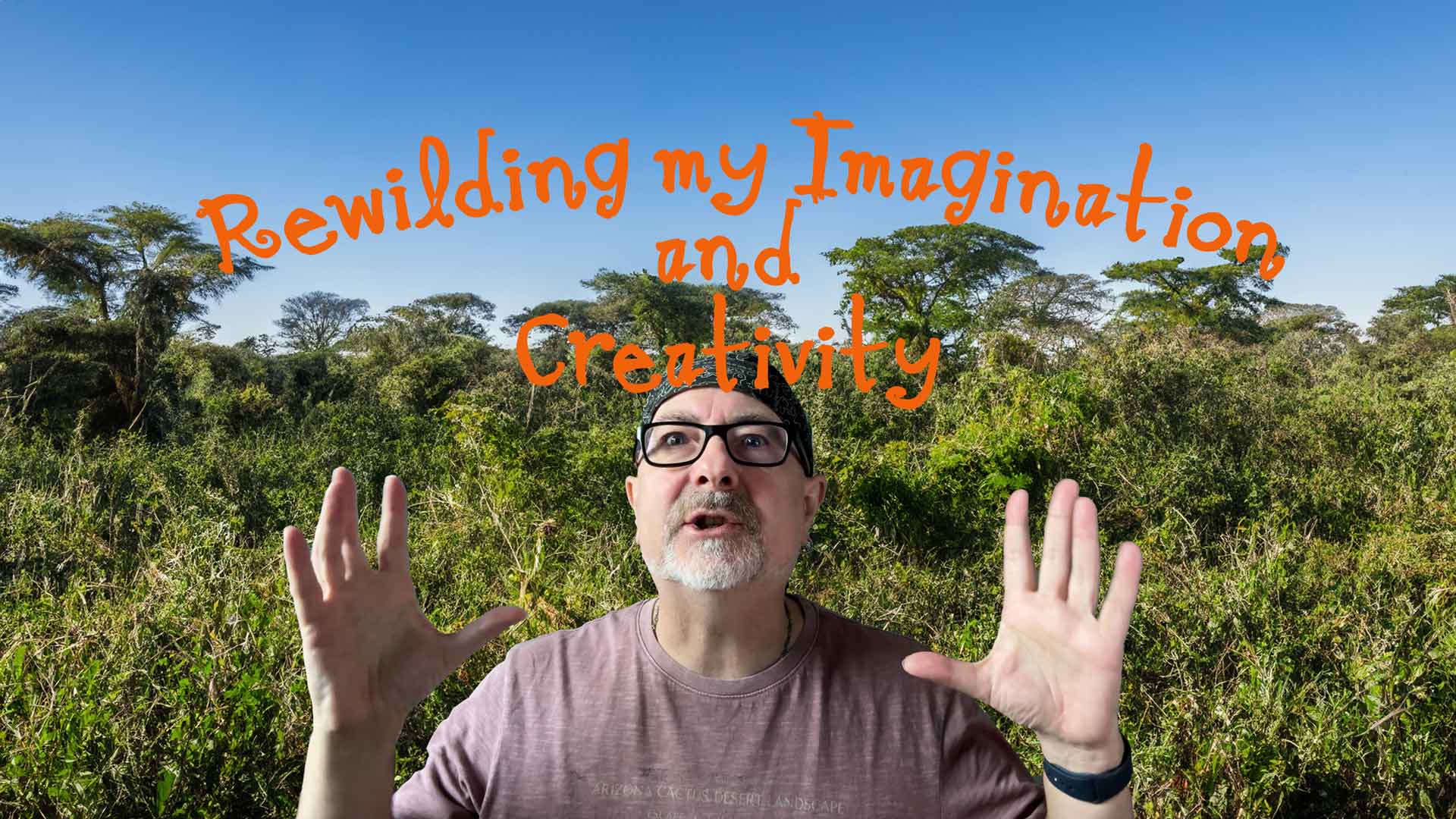
    Rewilding my imagination and creativity text with an image of darrenrhill in front of a wild jungle

    Hello worlds! I have found myself in a creative rut, my creativity has become automated and feels unnatural. This week’s vlog is all about beginning to rewild my imagination and creativity.


    Thank you for reading this post. Please share your thoughts in the comment section below.
    namaste
    d
    xox

    If you enjoyed this post please support my writing by making a donation of any amount.

    Sign up for my (ir)regular newsletter to keep up to date with my creative adventures, including special offers, and join me on Instagram | YouTube | Twitter | Pinterest
  • Choose your creative life

    Choose your creative life

    choose your creative life text with a picture of me

    What is your ideal creative life? So often reality and everyday living stop us from being creative. However, we can choose to fit in art, music and writing. In this week’s vlog, I look at the ideal vs reality of being creative.


    Thank you for reading this post. Please share your thoughts in the comment section below.
    namaste
    d
    xox

    If you enjoyed this post please support my writing by making a donation of any amount.

    Sign up for my (ir)regular newsletter to keep up to date with my creative adventures, including special offers, and join me on Instagram | YouTube | Twitter | Pinterest
  • Creativity, Just do it! – vlog

    Creativity, Just do it! – vlog

    Creativity. Just do it! text with image of Darren

    Two simple steps are helping me get back on the creative journey. In this week’s vlog, despite tech issues and other annoying things, I am managing to be creative.


    Thank you for reading this post. Please share your thoughts in the comment section below.
    namaste
    d
    xox

    If you enjoyed this post please support my writing by making a donation of any amount.

    Sign up for my (ir)regular newsletter to keep up to date with my creative adventures, including special offers, and join me on Instagram | YouTube | Twitter | Pinterest

  • My journal set up for 2023

    My current 2023 journal set up

    This week’s vlog is all about the journals I am using at the beginning of 2023. This year I am using a mix of paper and digital planners and journals. I’ll revisit this later to see how I am doing, what has worked and what has changed. Click above to watch on YouTube or below to view here.

    Here are links to the software mentioned in the video:
    Things 3 (digital to-do list)
    Day One (digital journal)
    Scrivener (fiction writing software)


    Thank you for reading this post. Please share your thoughts in the comment section below.
    namaste
    d
    xox

    If you enjoyed this post please support my writing by making a donation of any amount.

    Sign up for my (ir)regular newsletter to keep up to date with my creative adventures, including special offers, and join me on Instagram | YouTube | Twitter | Pinterest